The interface is iron now. The hotbar, every window and the loading screen share one set of forged pieces, with blood-red enamel on the buttons that matter.
The hotbar comes in two styles, and a setting picks between them. The console sits along the bottom of the screen, a plate that holds the skills, the flasks and the globes. The other style hangs a smaller open frame under your character's feet. Life and the class resource sit in glass globes, and the liquid inside moves. It swirls, it has a surface line, a ghost of the life you just lost fades out of it, and while a flask works the globe shows how much life is still on its way. When the Templar's Wrath runs white-hot, his globe glows. The flasks are round glass bottles that drain as you drink.
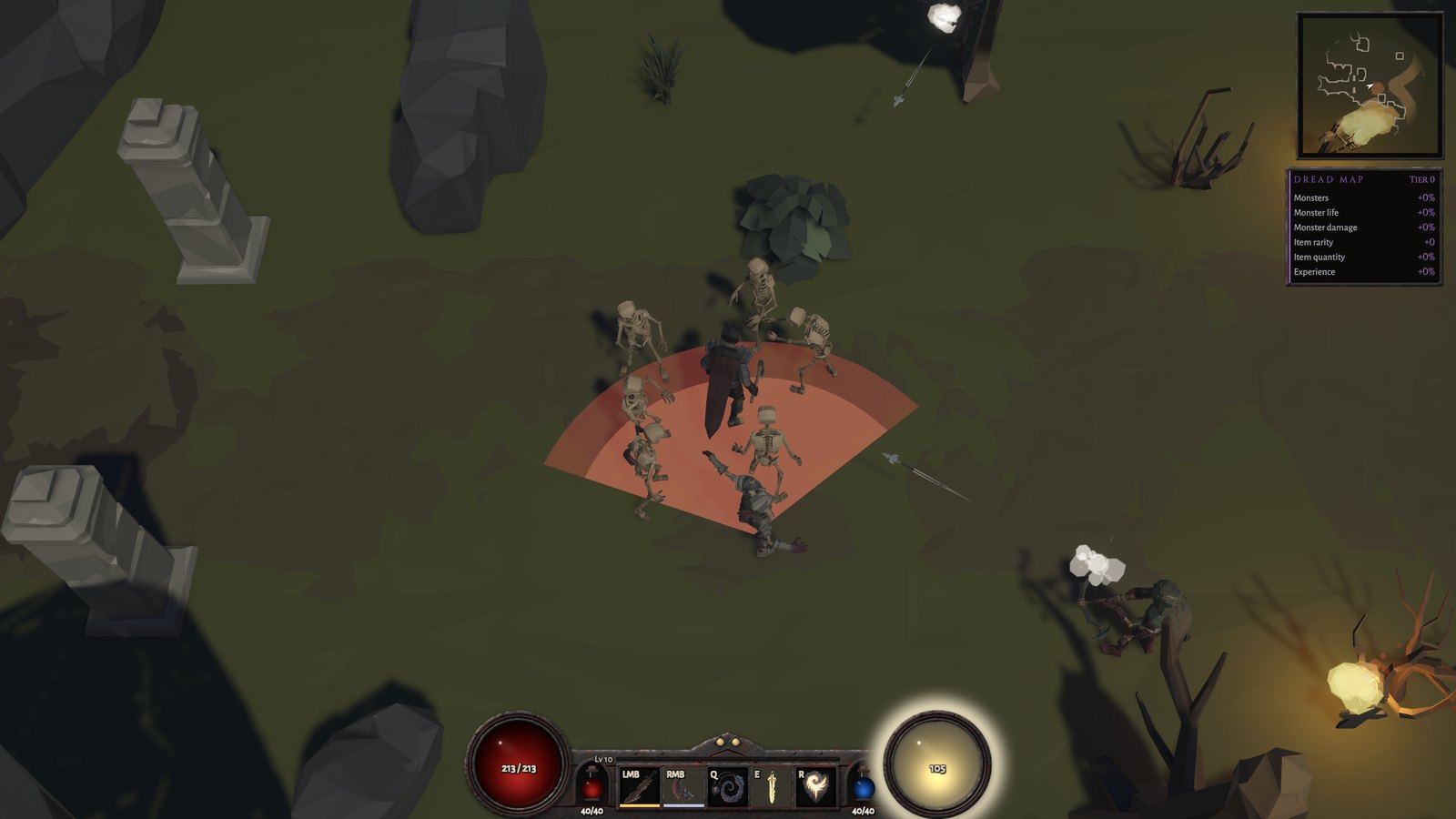
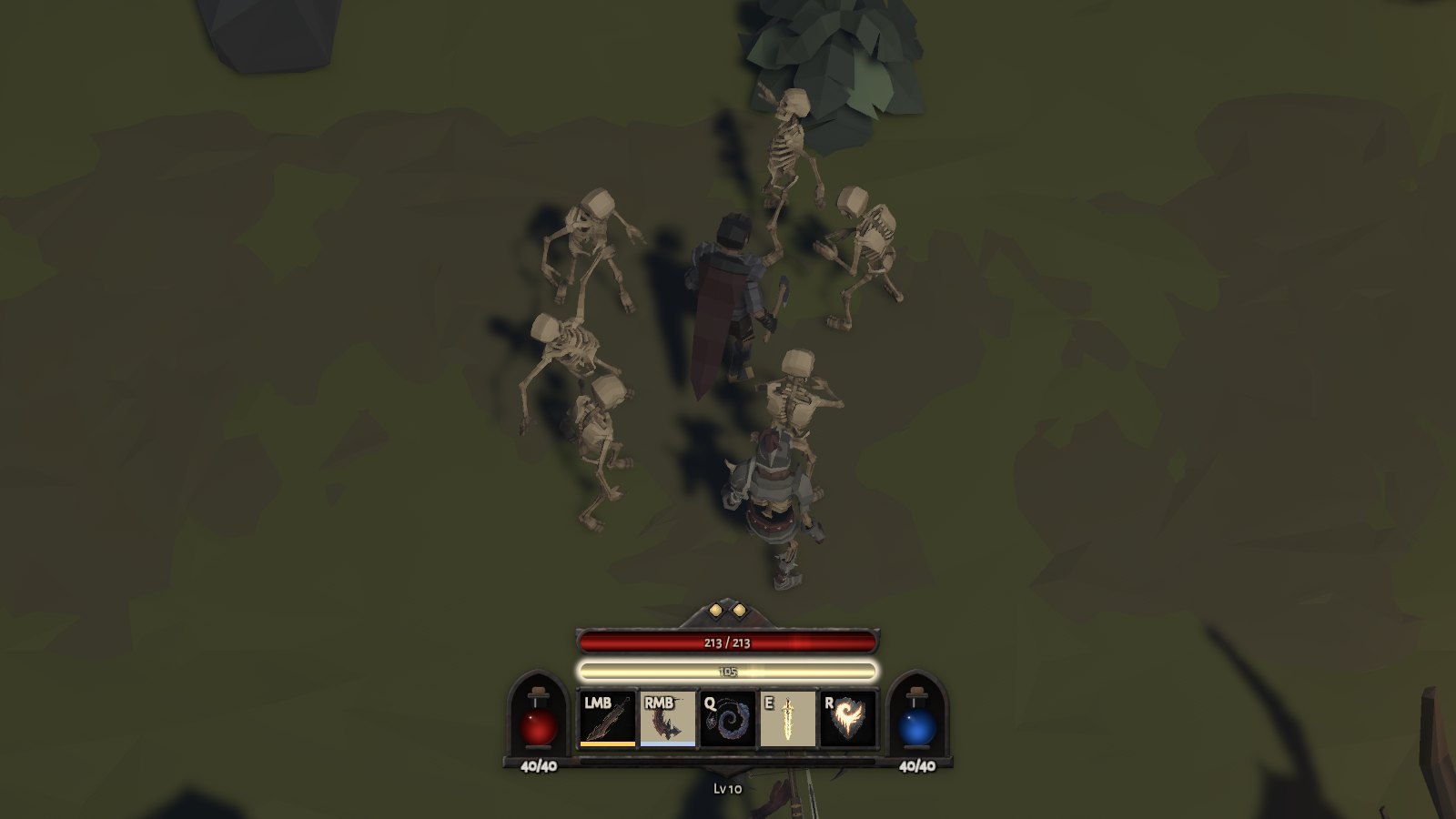
Every menu wears the same iron, from the title screen and character select to the inventory, the stash, the traders, the character sheet, the skill window, the talent trees, the map device, the waypoints and the settings. Window titles sit on a strap with a blood-red rule under it, and the big side windows carry a nameplate over their top edge. The inventory, stash and trader grids are rows of sunken iron cells.
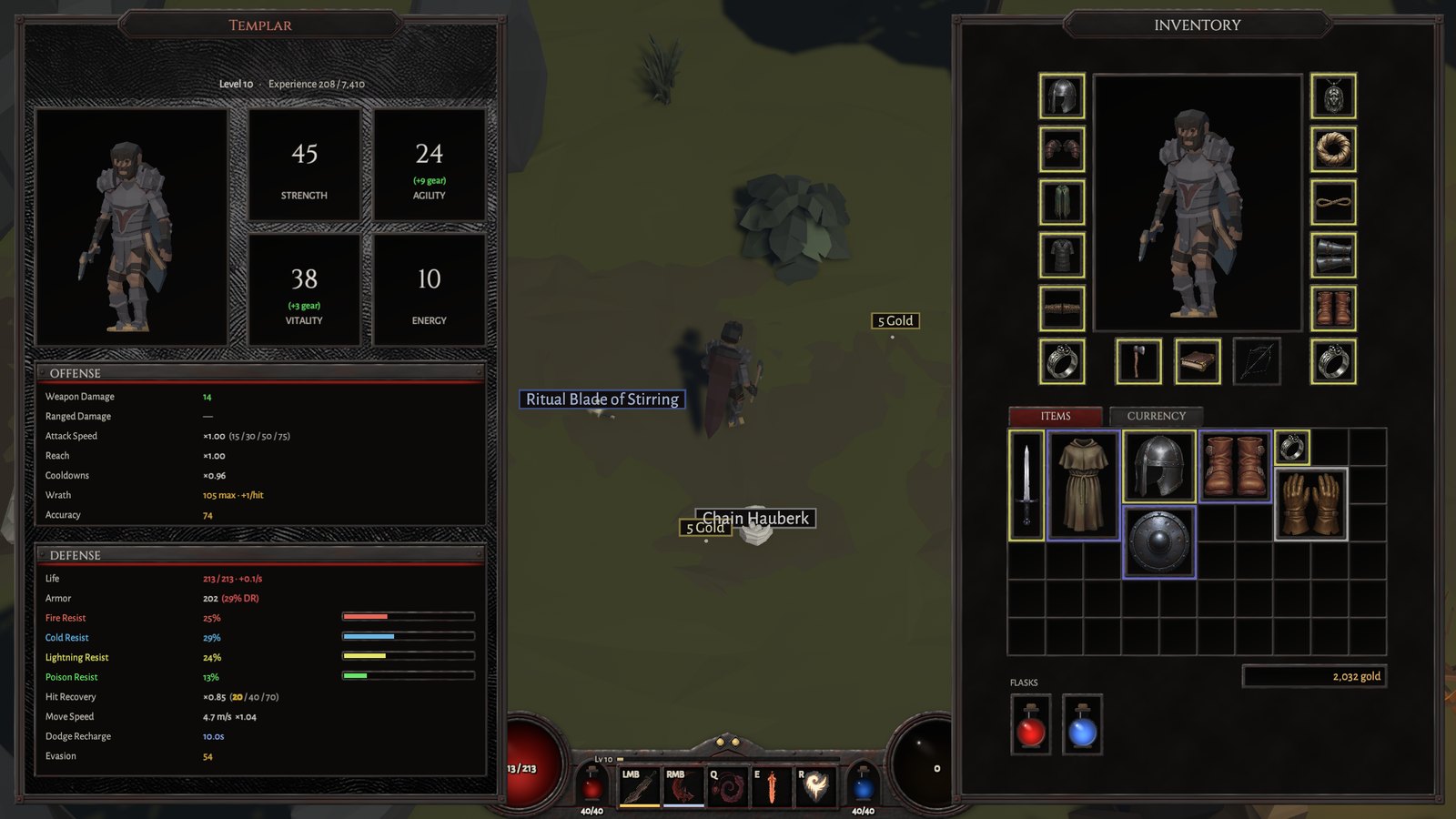
The skill window groups each tree under its own strap. A skill you are not yet high enough level for turns to red iron and says which level it needs. Runes sit in a section of their own, each with a gem in its colour, and the price reads as a plain number of points. In the talent trees, the talents you have taken shine gold, and one you cannot take yet shows the icon of the talent it needs.
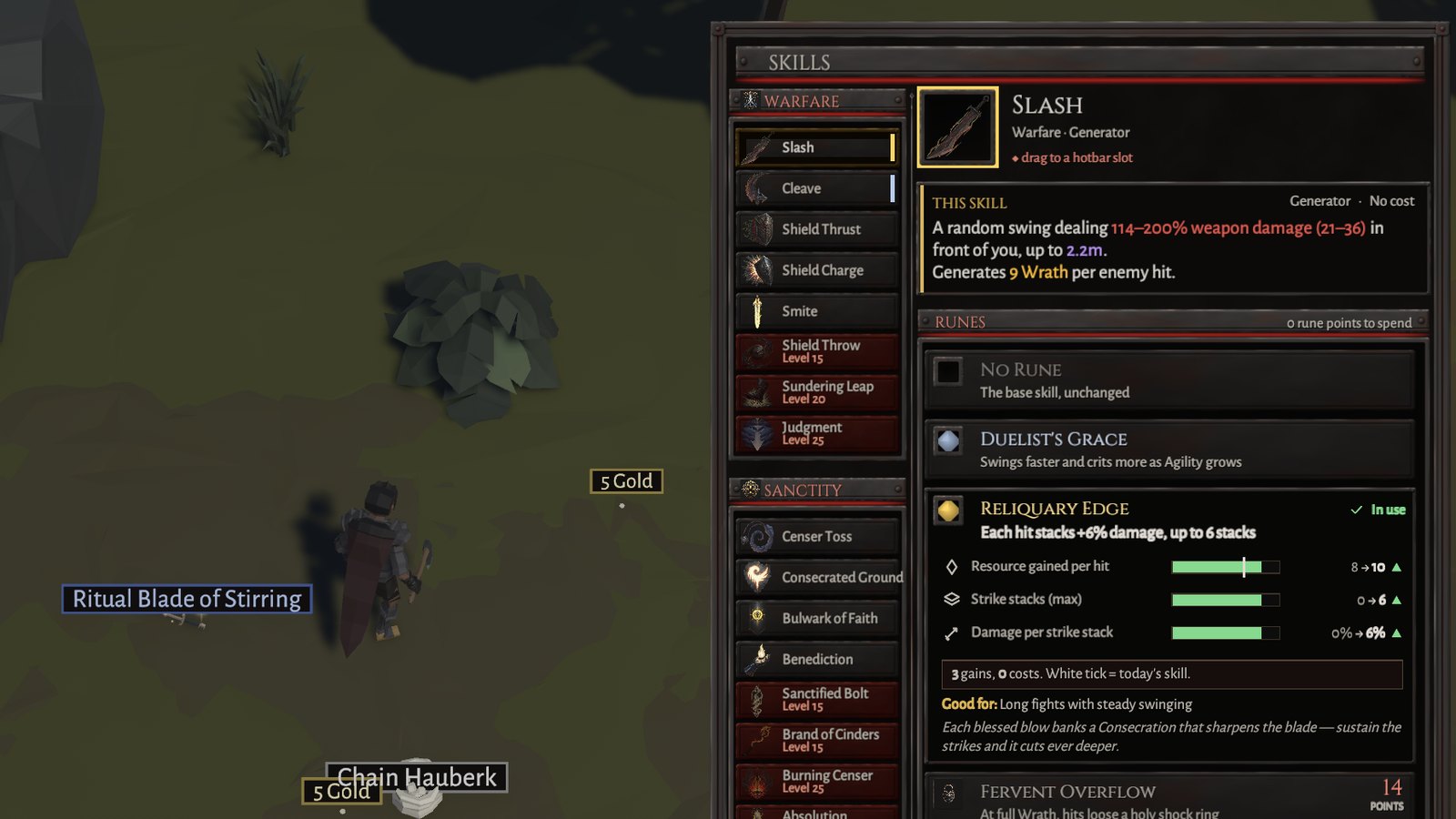
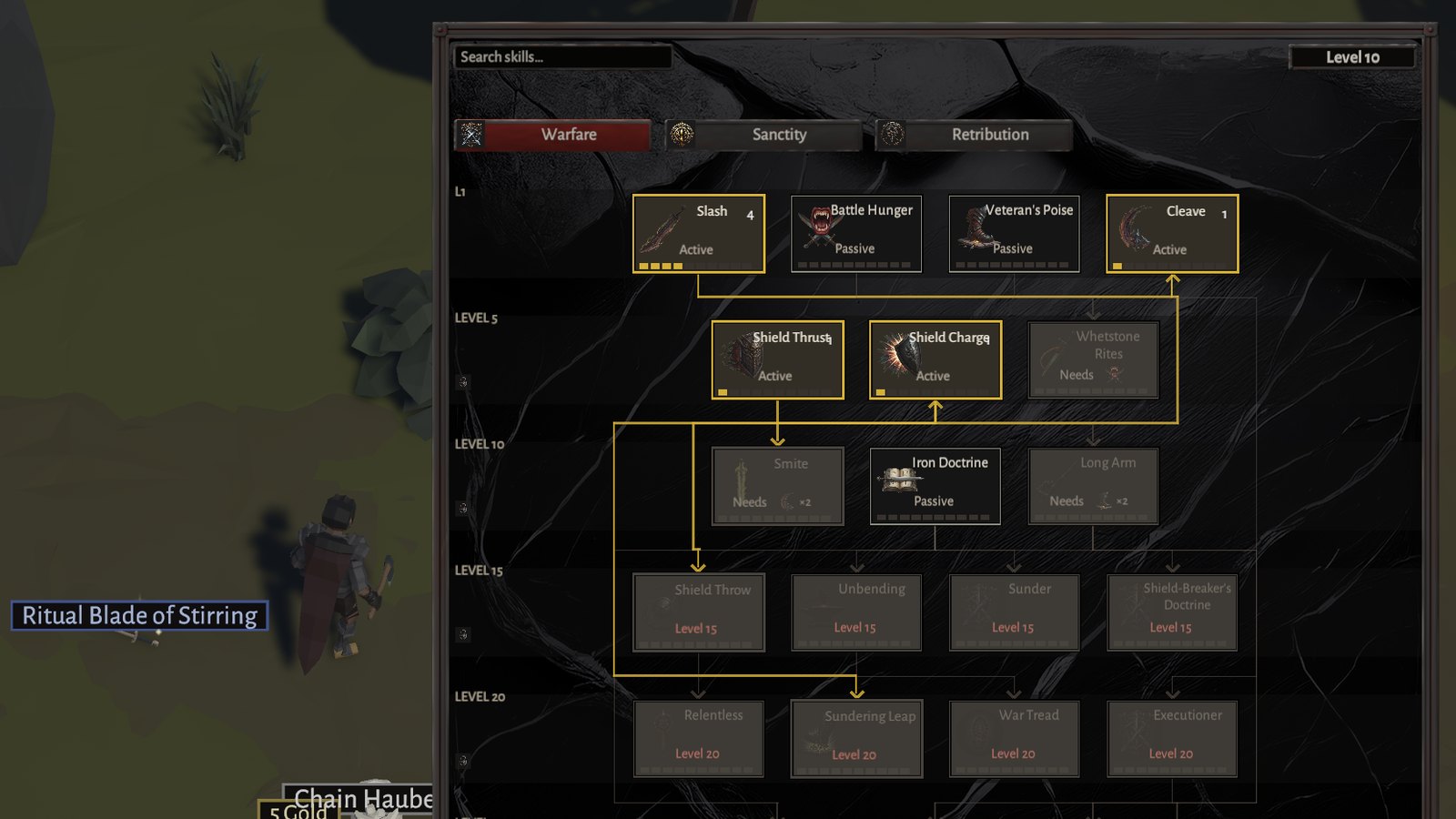
The boss bar, the minimap and the loading screen are iron too. F11 now hides everything, the hotbar and the windows, damage numbers, enemy health bars and loot labels, for a clean screenshot.
None of the iron was painted. The agent wrote a renderer that shapes each piece, lights it from the upper left, hammers its surface, scratches and wears its edges and darkens it with grime. The designer picked what stayed over five rounds of review.