The gold is gone. For most of Dreadmark's life the interface wore the genre's default, which meant warm gilt titles, honey-colored selection states, and buttons that glowed like a treasure chest. It looked fine. It also looked like every other loot game on the shelf, which is a strange thing for a game about a man carrying his shame in a censer to look like. So the whole UI got torn down and rebuilt around one question about what color this world actually bleeds.
The answer is dried blood. It's a dark oxblood red, the color of a stain that's had time to set into stone, and it doesn't shout. Titles, selected states, the pip that marks the skill you're hovering, and every rule and border that used to glow gold now sit in that same dark red. Because it all pulls from one shared value, the whole game can be re-tuned with a single number if it ever needs to shift again. Item rarity colors are deliberately untouched. A rare drop still flashes its own gold, because that's a different language entirely, the one player greed reads.
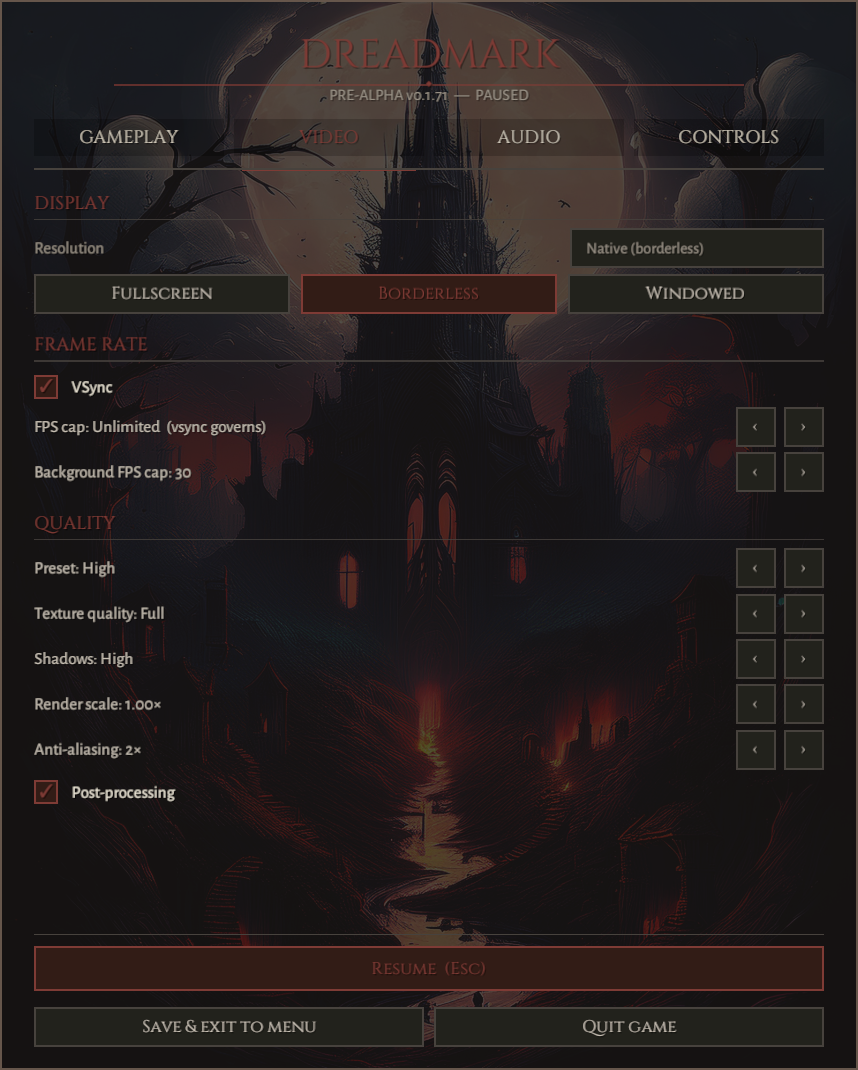
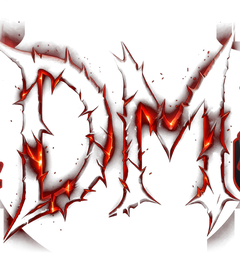
The lettering almost went the same way, with a heavy blackletter face across every panel, church-door type on a HUD. It looked the part and fought the eye, because dense fine print in a gothic cut is a lot to parse mid-fight. So the type split the difference. Inventory, skills, the vendor's ledger, and the pause menu put legibility first and atmosphere second, with a cooler, taller face on their headers and a plain, fast-reading face for the body beneath. The full ornate cut retreated to the title screen, the one place a HUD never needs to be fast, where DREADMARK gets to be taller, stranger, and more monumental than any panel around it.
The other half of this round was never on screen at all. It's about reporting a bug and then watching it get fixed. In most games, that first part is a small act of faith. You write it down, send it somewhere, and then hear nothing back. That uncertainty is what makes bug reporting feel like shouting into a well. Dreadmark just got a well with an echo. Filing got easier first. The in-game tool was already one button with a screenshot and your recent log attached, and now a quick slash command in the Discord server does the same job from wherever you're already talking about the run that went wrong. The bigger change comes after that, on a public board where every triaged group of reports gets its own line. That line updates as it moves from new to investigating to fixed, instead of freezing the moment it's posted. You don't have to ask whether someone saw your report. You watch the status change, in public, until a single dot on a board becomes a struck-through line marked fixed.
It's a small piece of infrastructure next to a boss fight or a skill tree, but it's the kind of thing that decides whether a community trusts a developer or just tolerates one. So report it, then go check the board.