For its whole life so far, Dreadmark has been the story of one pilgrim — the Templar, who solves problems by walking up to them and hitting them until they stop. This build ends that. Step up to the fire at character creation and you now choose who you are: the Templar as ever, or the Witch — and she plays like nothing the game has had before.
Two ways to die. The Templar kills in the present tense. He trades blows for Vigor and spends it the instant he earns it; his whole art is the moment of contact. The Witch kills in the future tense. She stands at range and lets a fight become a debt — layering curses that make every other wound bite deeper, seeding packs with stacking rot and green witch-fire, keeping the debtors alive-but-owned with slows and pulls and a blink into the night — and then she collects, detonating the whole ledger at once. Her resource isn't Vigor but Malice, banked hit by hit with her cheap weaving-bolts and spent on the hexes that do the real work.
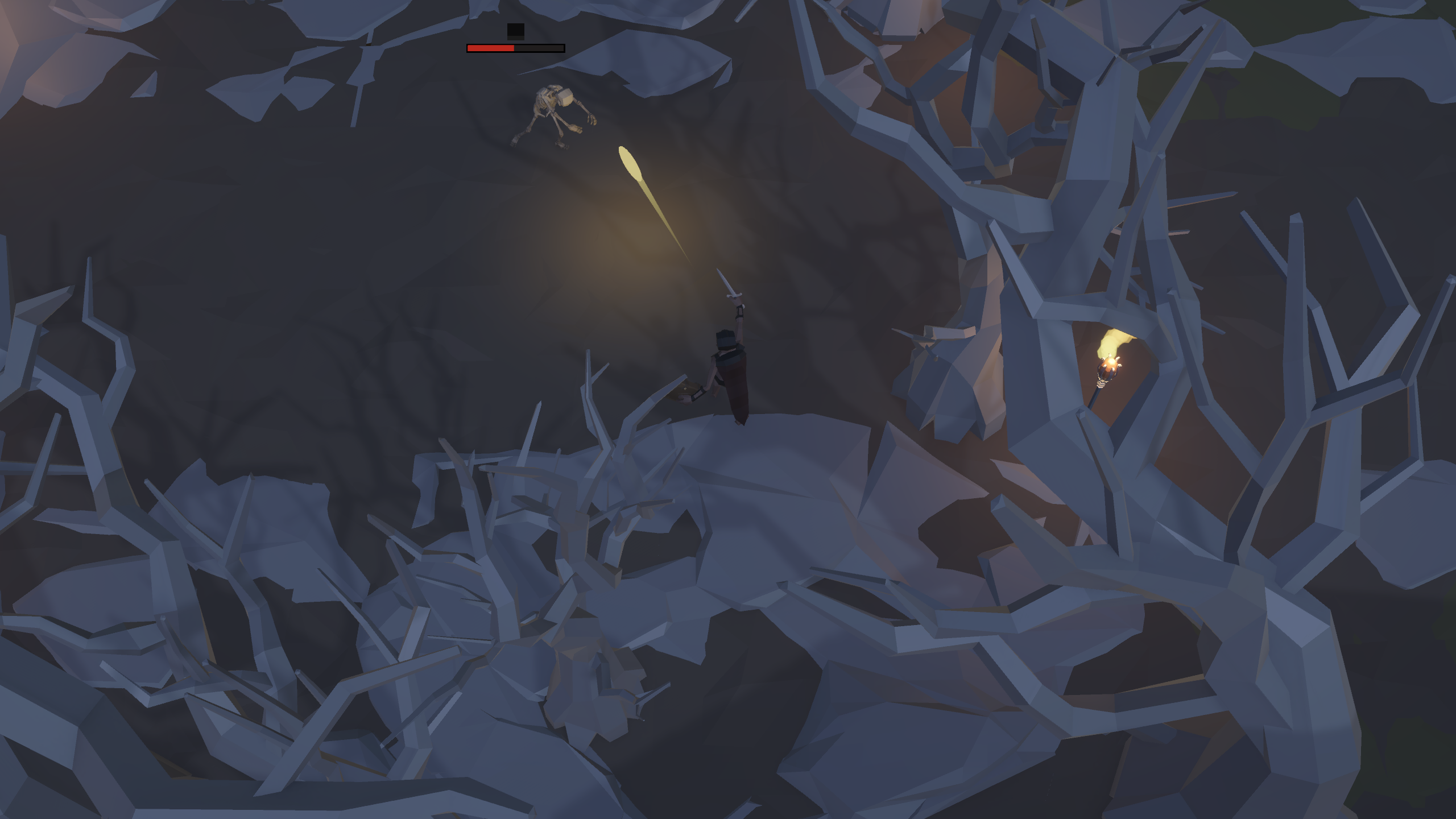
Three roads through the dark. Her trees each answer the question "kill them later" differently. Maledictions is the curse web — hexes that turn a pack into a shared wound, culminating in a spell that links every enemy in a burst so that harm dealt to one echoes to them all. Pestilence is the rot — a lobbed gob of plague at level one grows into crawling blight-fields, a bloated plague-thrall whose every strike carries your poison, and a bolt of pure contagion that makes one afflicted foe infect the whole crowd around it. Ruination is the cash-in — witch-fire and burning ground feeding the detonations that harvest it all, right up to a capstone bell that tolls once and erupts every affliction on every foe in a wide ring at once.
Runes that change the spell, not just the number. The point of a rune here isn't "+15% damage" — it's a different spell. Her escape blink can instead leave a poison cloud on the spot you vanished from, or arrive like an omen and blast the ground where you land. Her curse-circle can become a gravity well that drags the pack to its heart, or a field of black ice that freezes what lingers. Her plague-thrall can split into three ranged spitters, or burst on death into a killing cloud. Her contagion can carry your curses along with your rot, or land stronger on the neighbours than it did on the source. One skill, three genuinely different ways to play it — and that's before you get to the tree.
A different face at the fire. The Witch is her own figure — a female pilgrim on the same worn road, wearing the same gear your Templar would, animated on the same bones — so everything the wardrobe already knows how to do, she inherits for free. Pick her at creation and she steps into the firelight with her own voice and her own gesture; the game remembers who you chose, and loads her back exactly as she was.
The martial road and the hex road now run side by side out of the same camp. The numbers will settle with play, and the deepest theorycraft — the pathing and the hard choices that make a build yours — is the next thing we're tearing down and rebuilding from the ground up. But the second pilgrim is real, she's playable end to end, and she kills things in a way the first one never could: patiently.