Until today, Dreadmark's toughest fight was a big skeleton with a health pool. Dangerous, but anonymous. This round gave the graveyard its nobility: five named minibosses, one grown from each enemy family the game already knows, each with a signature kit you have to read rather than out-stat.
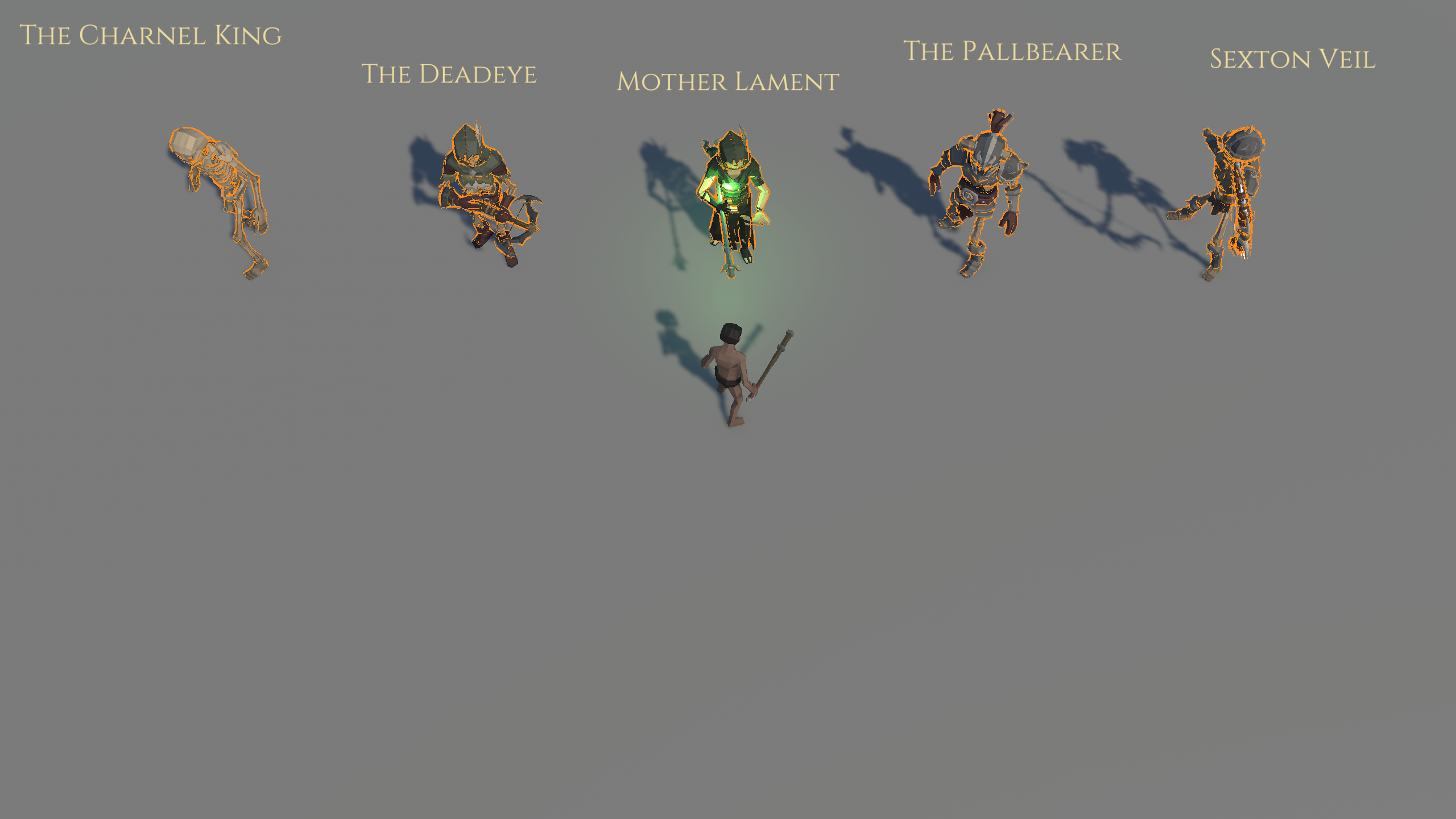
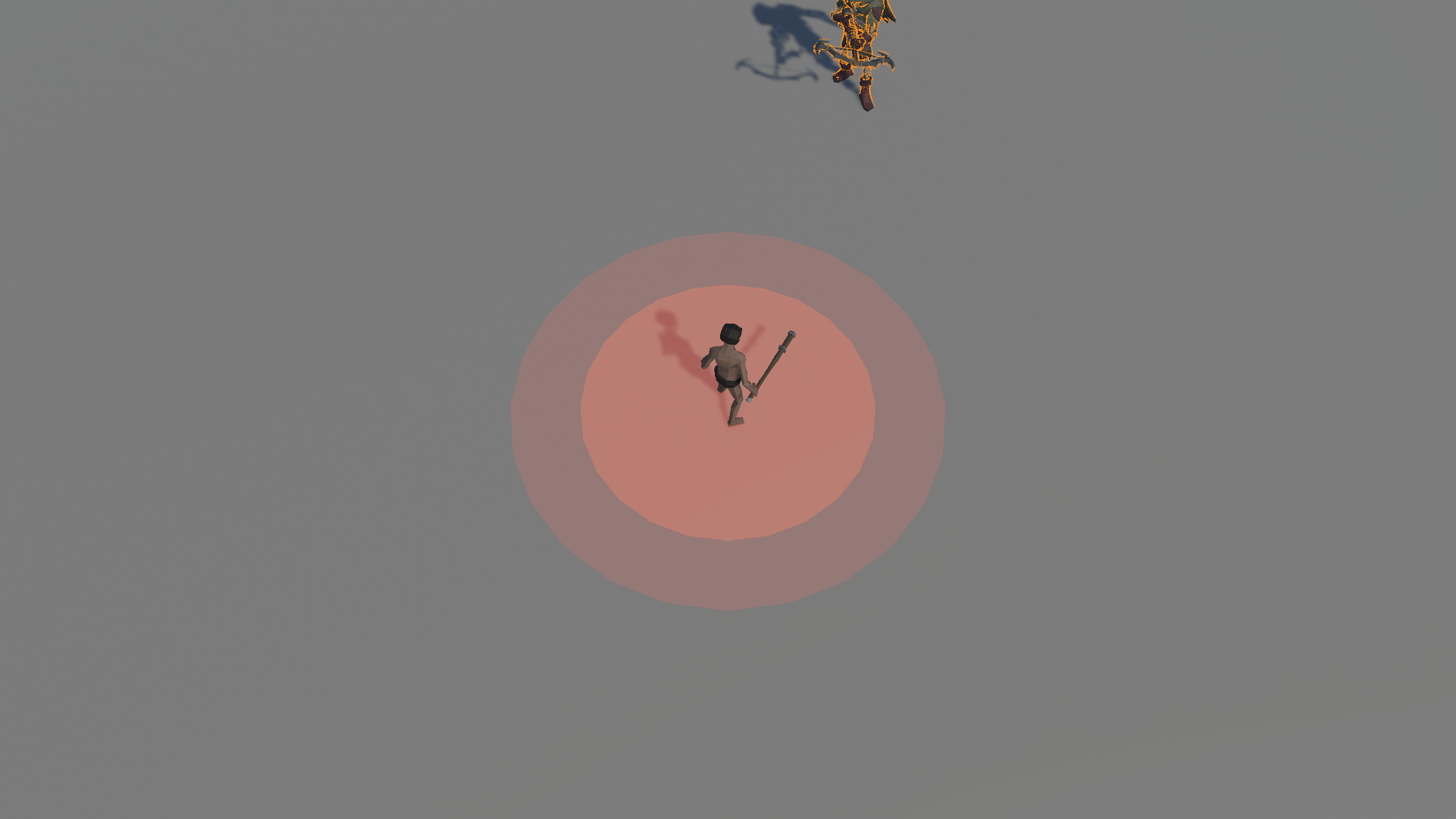
The Charnel King is the skeleton warrior grown into a throne-born giant. His chained cleave carves three telegraphed arcs in sequence — he re-aims between sweeps, then locks, so the drawn arc never lies — and at half health he stops the cycle once to detonate a full circle of bone around himself. He does not flinch. Royalty doesn't.
The Pallbearer is the armored monument, slower than the King and harder to move. He picks his blow by where you stand: keep mid-range and he slams a long, narrow shockwave down a line — the crack races away from him, so you step ASIDE, not away — get greedy up close and he stomps a full quake circle instead. Get out, or get flattened.
The Deadeye is the crossbow ranger perfected. His ordinary shot is a five-bolt ratcheting fan; stand at his happy distance and he marks a circle at your feet, then fills it with a rain of falling bolts. Corner him and he vanishes in a burst of grave-smoke, reappearing meters away with the crossbow already shouldered. He's fragile for a boss — diving him through the rain is exactly the counter he's daring you to try.
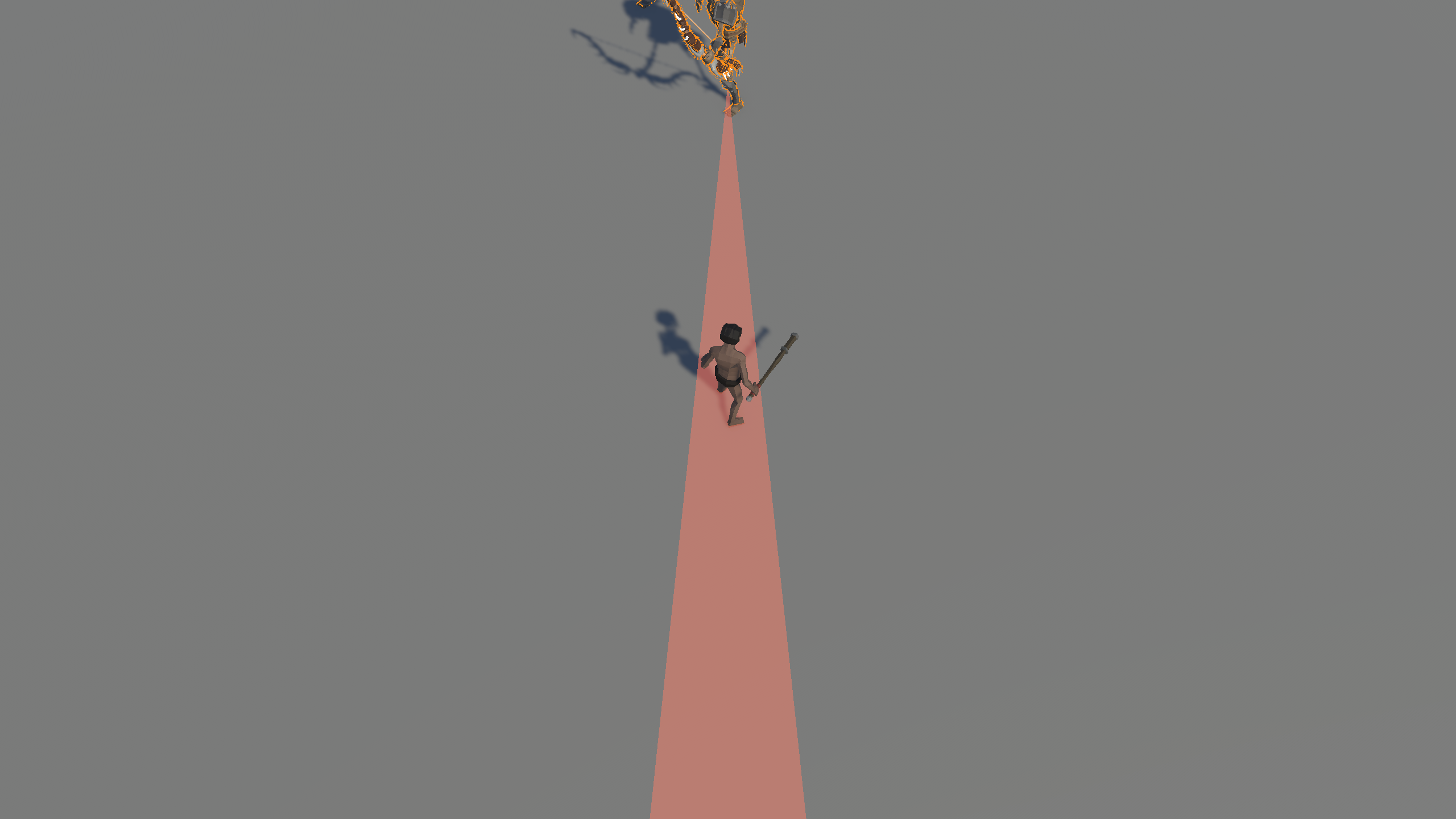
Sexton Veil is the bow skeleton as a graveyard executioner. Everything he does is a drawn line: a siege-scale greatarrow down the longest telegraph in the game, and a crippling shot that takes your legs — connect with it and you are 45% slower for the next few seconds, with the debuff ticking on your own status bar. Where the Deadeye escapes divers, the Sexton makes sure you can't dive at all.
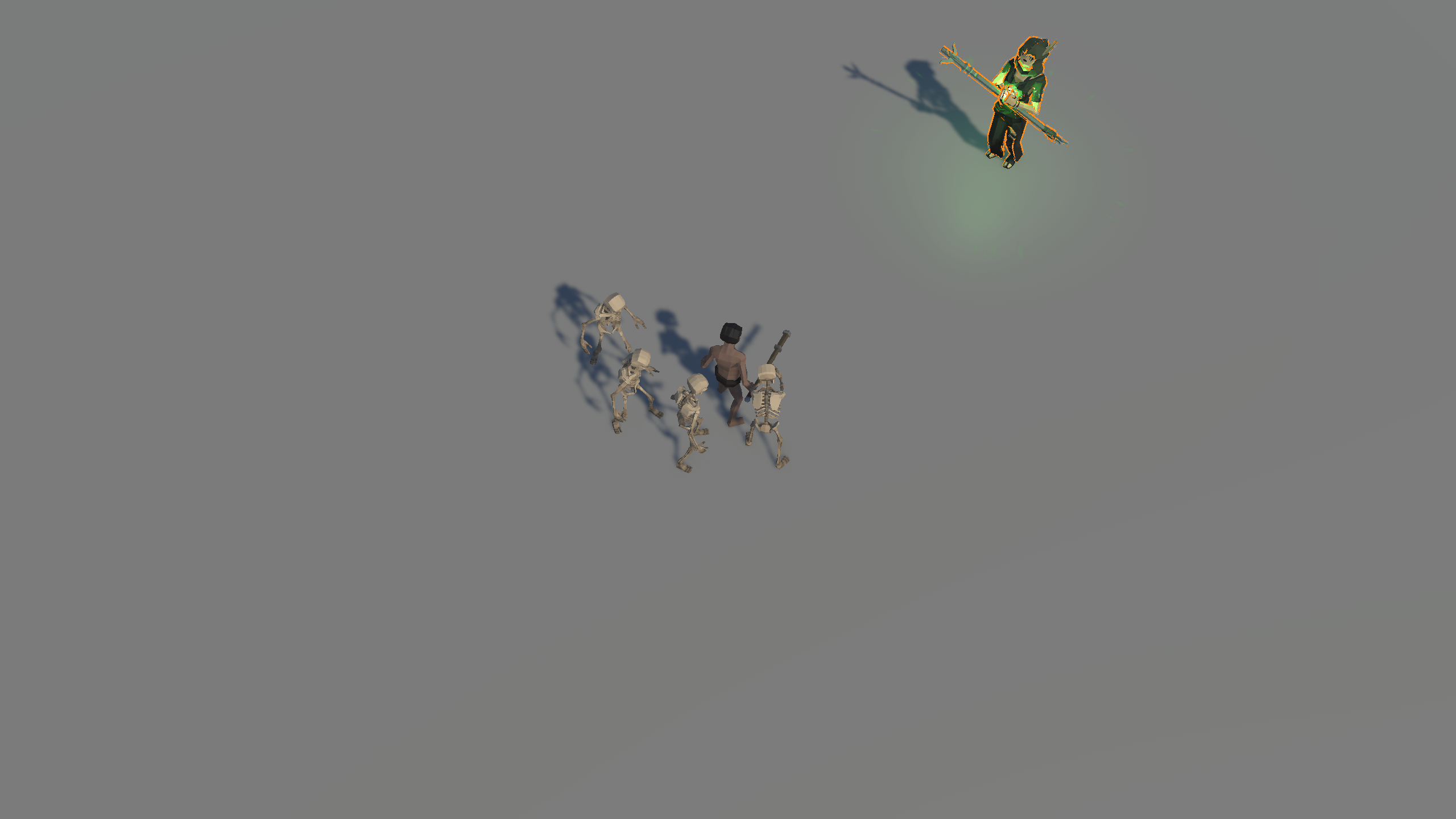
Mother Lament is the grave witch grown monstrous, and she almost never fights you herself. See her, and the graves around her wake — four skeletons rise at once. Thin her pack, and she plants herself in a channel of green rings to pull two more out of the earth. Her curse now lingers: get caught in the circle and the damage keeps ticking after the burst. Kill the mother or drown in children — and no, her children carry nothing: raised minions drop no loot and give no experience. The mother is the prize.
Bosses now read as bosses. Every named miniboss carries a gold nameplate overhead, a legendary-orange outline, and a health bar scaled up with the monster itself. When something big with an orange rim walks out of the dark with its name over its head, you know what kind of fight this is before the first telegraph draws.
And they're part of the world, not just an arena trick. The same encounter system that places ambush packs in the levels can now place any of the five — a level author drops a boss row into a pack definition and that graveyard corner has a landlord. Boss kills pay out in boss-class loot: six drop rolls and a heavy experience multiplier.
Under the hood, the round's quiet win is that enemies can finally debuff you through the same status system your skills use on them — the Sexton's cripple and Lament's lingering curse are the first two tenants of a seam that future horrors will share. Your status bar shows the affliction draining away in real time, exactly like the buffs you cast on yourself.
Next: the bosses meet a human. Feel verdicts on telegraph timings, slow strength, and army size come from playtesting, and the audio pass — every boss already has its cue keys wired and waiting silent for the clips.