Dreadmark's ranged slot has been a stat line without a body: you could wear a bow next to your melee kit, and nothing about your character admitted it existed. This round built the whole arc from "it's on your sheet" to "you're standing in a graveyard at full draw."
It starts on your back. A worn bow, crossbow, or wand now renders stowed across the character's back — every one of the game's 97 weapon bases got a hand-tuned stow pose in a single heroic tuning session, because the moment the swap existed, any weapon could end up back there: draw your bow and your greatsword takes its place between your shoulders.
The swap itself is one key. Z switches your active kit, and it's a real motion, not a teleport: the character reaches back, and the weapons trade places at the exact moment the hand crosses the shoulder — bow equip and disarm animations for archery, a rifle-style pull-out for the crossbow. Press Z mid-swing and the swap queues politely until the swing finishes. Use a melee skill with the bow out and the character stows it instantly and casts — switching intent never fights you.
Then the shot, and this is the part with game-feel opinions baked in. The attack button is context-sensitive: with steel in hand it swings, with the bow drawn it draws. Hold the button and the character nocks a visible arrow, pulls to full draw, and tracks your cursor — release to loose. Release too early and nothing flies: a full draw is required, and a soft click tells you the string is set. That single rule kills spam-clicking and gives archery a rhythm — draw, settle, loose — that feels nothing like melee, which is exactly the point. The arrow is a real projectile that crosses the field, strikes the first enemy on its line, carries the bow's damage, and feeds the same resource-on-hit economy as a basic swing. The crossbow plays the same song in a different register: carried like a rifle, aimed from the shoulder, bolt visible in the groove.
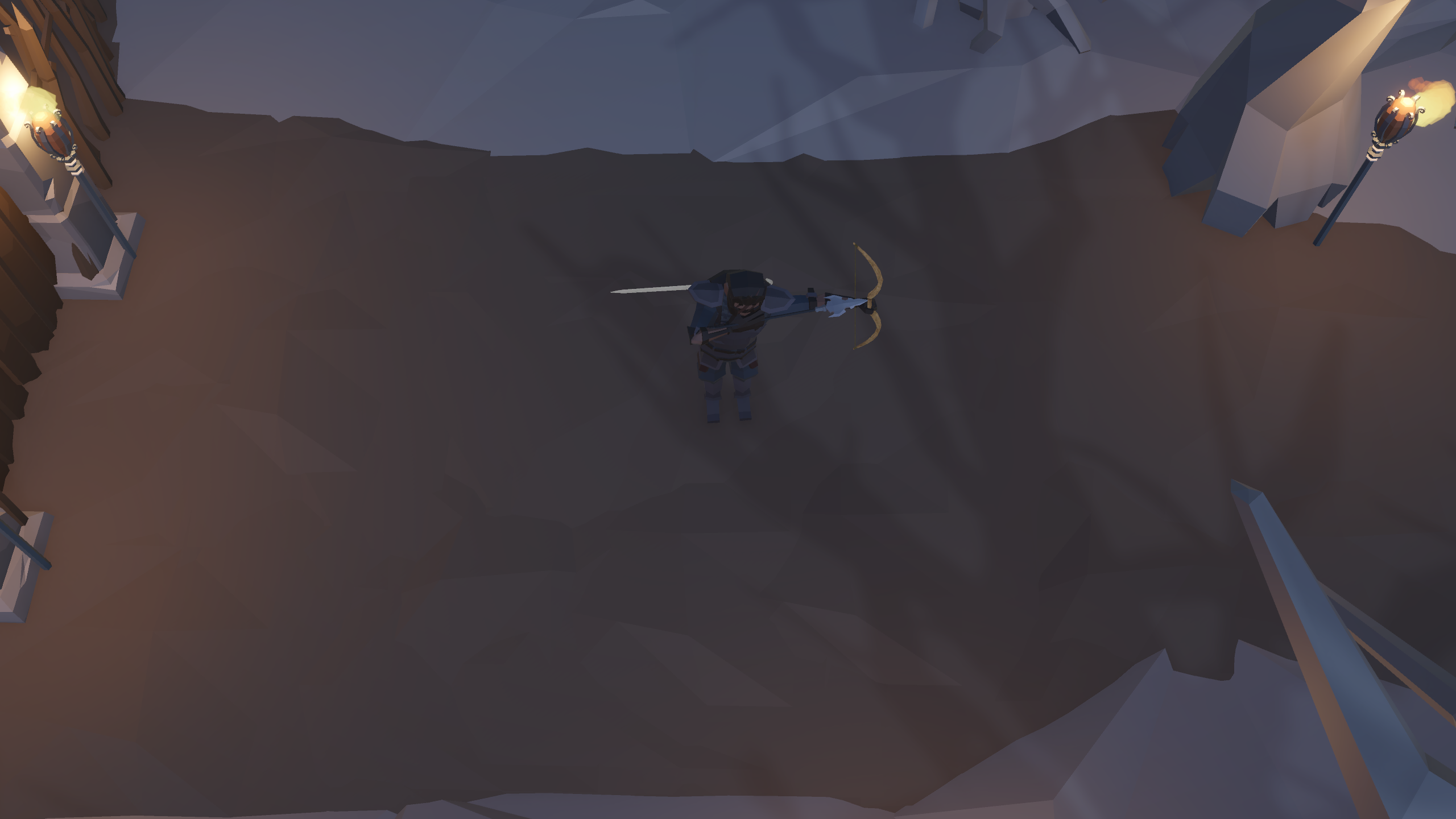
Details that took iteration: the archer's stance aims across the body, so the character angles itself until the bow visually points where the arrow will actually fly; the nocked arrow spans hand-to-string-to-bow and stays glued to that line through the whole draw motion; and the drawn bow rests low in a relaxed carry when you're just walking — aiming is something you do, not something you are.
Still open on the ranged ledger: a proper feel pass on crossbow bolts in live combat, and teaching the tooltips to talk about ranged damage. But the fantasy is in the game: sword on your back, bow at full draw, one key between them.